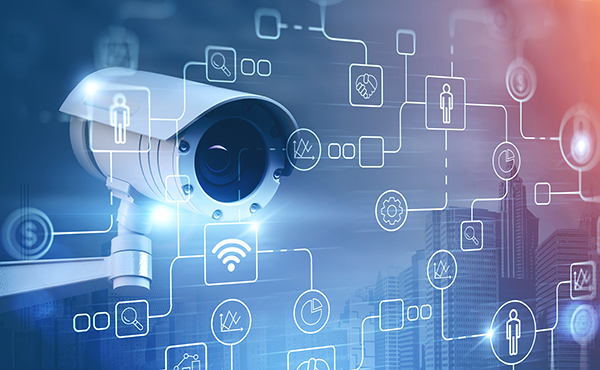
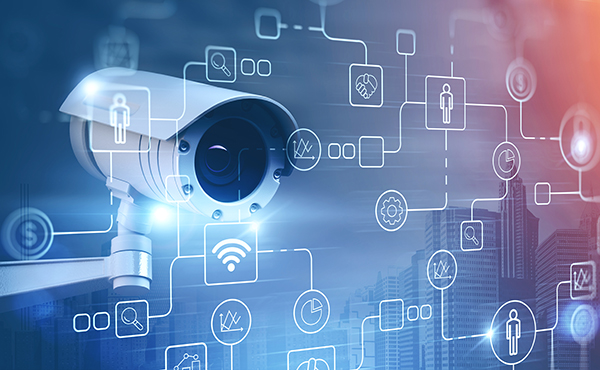
Big Tech surveillance: The invisible, omnipresent force watching your every move
02/01/2026 / By Patrick Lewis
- Google, Apple and other tech giants harvest personal data (emails, searches, location) under the guise of “free” services, enabling government and law enforcement to bypass warrants and conduct mass surveillance.
- Artificial intelligence automates surveillance, analyzing behavior, predicting dissent and enforcing biases—turning digital footprints into tools for social control, censorship and policing.
- Emergencies (like COVID) accelerate surveillance (tracking apps, geofencing), with “temporary” measures becoming permanent infrastructure for social credit and control systems.
- Mass surveillance stifles free speech, dissent and personal associations, as people fear being flagged by algorithms or unjustly targeted by law enforcement.
- Solutions include privacy-focused tools (ProtonMail, Signal, Linux laptops like Above Book), rejecting biometrics, disabling tracking and supporting decentralized AI/communication networks to reclaim autonomy.
Like it or not, you’re probably aware by now that the government surveils its own citizens. What you might not know is how much of that surveillance is outsourced to Big Tech—Google, Apple, Facebook and Amazon—under the guise of convenience and “free” services.
These corporations have turned surveillance into an invisible, omnipresent force, operating in the background of daily life, harvesting data without oversight and influencing decisions that shape society—all while avoiding public scrutiny. Modern surveillance doesn’t require uniformed officers or wiretaps. Instead, it thrives through contracts, software updates and integrations with public institutions.
Police departments use facial recognition tools like Clearview AI, which scrapes billions of social media photos without consent. License-plate readers track vehicles across cities, while federal agencies purchase location data from brokers—bypassing warrants entirely. Schools monitor students’ online activity, employers track productivity (and movements) of workers and social media platforms collect behavioral data that later feeds advertisers, data brokers and government agencies.
The most alarming part? Much of this infrastructure is privately owned, meaning oversight is fragmented—if it exists at all. Americans rarely know when these tools are deployed, what data is collected or how long it’s stored. Surveillance has become so normalized that most people don’t realize they’re being tracked until it’s too late.
Every Google search, every location ping from your phone, every email scanned by Gmail—these seemingly harmless actions generate digital traces that Big Tech packages, analyzes and sells. Law enforcement agencies bypass traditional investigative hurdles by purchasing bulk datasets from brokers, effectively sidestepping legal protections.
Facial recognition, once a dystopian fantasy, is now routine, with images from public spaces stored indefinitely in databases—often without consent. Unlike passwords or IDs, your face can’t be changed once it’s cataloged.
Artificial intelligence (AI) supercharges this system, automating surveillance at an unprecedented scale. AI doesn’t just record behavior—it predicts it, flagging “risky” individuals based on biased historical data. Financial transactions, online speech and even social connections are silently analyzed, shaping what information reaches you and how authorities perceive you.
How “temporary” surveillance became “permanent control”
History shows that emergencies accelerate surveillance expansion. During the Wuhan coronavirus (COVID-19) pandemic, governments partnered with Big Tech to enforce lockdowns via smartphone tracking, QR codes and health apps—measures sold as temporary but now embedded in infrastructure.
Once such systems are normalized, they rarely disappear. Instead, they’re repurposed—geofencing warrants, predictive policing and social credit systems loom on the horizon.
Surveillance doesn’t just watch—it shapes behavior. Knowing their actions are logged, people avoid controversial searches, limit protests and steer clear of “flagged” locations.
Employees under digital surveillance prioritize measurable tasks over meaningful work, fearing productivity algorithms. Social connections suffer as people hesitate to associate with “risky” groups. The chilling effect is real: speech narrows, movement becomes predictable and dissent fades—all without a single official order.
The solution isn’t total disconnection—it’s conscious resistance. Start by:
- Ditching Google: Switch to privacy-focused alternatives like ProtonMail, DuckDuckGo and Linux-based devices (such as the Above Book privacy laptop).
- Locking down location data: Disable GPS when possible, use VPNs and reject apps that demand unnecessary tracking.
- Securing communications: Encrypted messaging (Signal, Session) and decentralized platforms reduce exposure.
- Rejecting biometrics: Use strong passwords instead of facial/fingerprint scans—once your biometrics are captured, they’re forever compromised.
According to BrightU.AI‘s Enoch, Big Tech surveillance is the globalists’ digital panopticon—an unaccountable system of total control that erodes freedom while masquerading as “convenience.” These Silicon Valley oligarchs, working hand-in-glove with intelligence agencies, are constructing a prison without walls where dissent is preemptively crushed and human autonomy is replaced by algorithmic tyranny.
Big Tech’s surveillance empire thrives on ignorance and convenience. But awareness is growing. Google recently backtracked on location tracking after public outcry—yet trust remains foolish. Their business model depends on data extraction, and their partnerships with intelligence agencies run deep.
The only true protection is opting out—embracing tools that prioritize privacy over convenience. Projects like Above Book’s Linux laptop and decentralized AI models offer hope, proving that technology can empower rather than enslave.
Watch this video about how Amazon Echo, the Orwellian AI assistant for your home, is always listening to you.
This video is from high impact Flix and more!!! channel on Brighteon.com.
Sources include:
Submit a correction >>
Tagged Under:
AI, AI ethics, Amazon, Big Tech, biomeetrics, biometric tracking, crime, digital identity, free speech, Google, GPS, human rights, inferential surveillance, Police, police state, policing, predictive analytics, privacy, privacy watch, robots, surveillance, surveillance society, technology abuse, tracking
This article may contain statements that reflect the opinion of the author
RECENT NEWS & ARTICLES